Ruggable · Conversion / Purchase · Warm / consideration · July 2026 · Handoff: Partial · By Taylor Sicard
Ruggable ad teardown: Moment anchor
Attaches the product to a life event the buyer is already inside, rather than to a category they are not shopping.
“Anchored to moving day and redecorating, not to rugs.”

Handoff: Partial
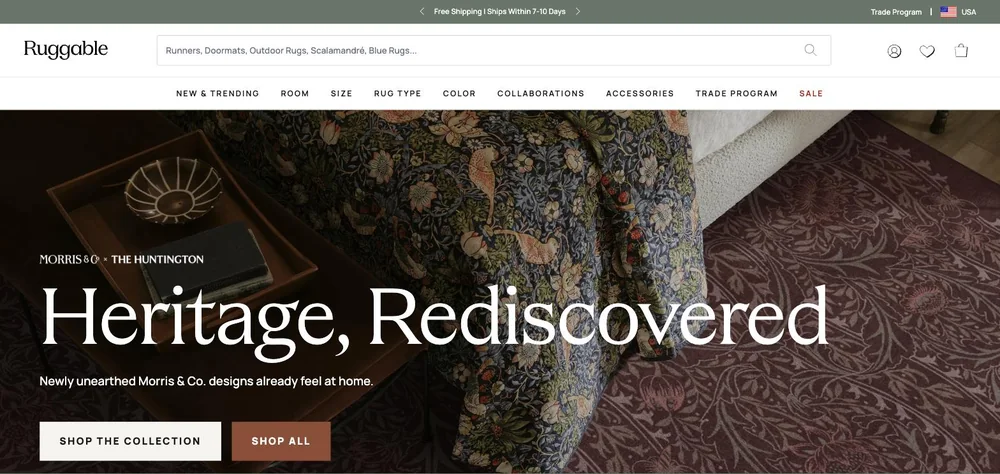
The ad names one product and one buyer: "4 Reasons Ruggable All-In-One Is The Only Rug You'll Ever Need", subtitled "According to a Mom & New Homeowner", over a creator unrolling a plain grey rug in an empty room. The homepage hero is a Morris & Co. x The Huntington collaboration, "Heritage, Rediscovered", selling dark floral archive prints with "Shop The Collection" and "Shop All". The All-In-One is not named anywhere above the fold, so the four reasons have nowhere to resolve. The verdict is capped at Partial because the click was not followed: the page read here is the brand's homepage, not a confirmed destination, and a Break asserts more than an inferred page can support.
The read
Motion's analysis of 3,254 recent ads across 15 top DTC brands found roughly one in three using moment anchoring. Ruggable is their cleanest example: the creative sits inside the moving or redecorating moment, where a washable rug is an obvious answer to a question the viewer is already asking.
What the ad does
- Anchoring borrows intent the category cannot generate. Nobody wakes up shopping for rugs; plenty of people wake up mid-move. The creative sits inside that moment, captioned "4 Reasons Ruggable All-In-One Is The Only Rug You'll Ever Need" over a woman unrolling a rug in an empty room, so a washable rug answers a question the viewer was already asking.
- The moment supplies both the deadline and the competitive set. A life event has its own timeline, so no invented urgency is needed, and framed as a moving problem the product stops being compared with other rugs. Motion found roughly one in three of 3,254 recent ads across 15 top DTC brands anchoring this way, which makes Ruggable the clean example rather than the outlier.
Objective fit
Warm consideration. The anchor pre-qualifies for timing, which is usually the hardest variable in a considered home purchase.
Ruggable ran this conversion creative to the landing page it clicked through to, ad captured July 2026, page captured August 2026. Attaches the product to a life event the buyer is already inside, rather than to a category they are not shopping. Read as a pair, the handoff rates partial.
- Anchoring borrows intent the category cannot generate. Nobody wakes up shopping for rugs; plenty of people wake up mid-move.
- The moment supplies both the deadline and the competitive set. A life event has its own timeline, so no invented urgency is needed, and framed as a moving problem the product stops being compared with other rugs.
- Where the handoff lands: The ad names one product and one buyer: "4 Reasons Ruggable All-In-One Is The Only Rug You'll Ever Need", subtitled "According to a Mom & New Homeowner", over a creator unrolling a plain grey rug in an empty room.
- What to fix: Send a moment ad to a page that names the moment's product. The click here lands on a homepage hero selling a Morris & Co.
Ad captured by Taylor Sicard 2026-07-10, landing page 2026-08-20. Screenshots reproduced for commentary and criticism.
Tagged
- Objective
- Conversion / Purchase
- Funnel
- Warm / consideration
- Format
- Demo / product-in-useUGC video
- Placement
- Meta feedMeta reelsPinterest
- Category
- Home & Household
- Mechanic
- Moment anchoringProblem agitationMechanism reveal
- Handoff
- Partial
- Brand
- Ruggable
Moment anchoring is #3 of 21 ranked mechanics, on 60 pairs. See where moment anchoring ranks
How this was evidenced
- Evidence
- Destination inferred The ad was captured, but the destination recorded is the brand's homepage rather than a click that was followed. The read is of that page, not of a confirmed click-through.
- Ad creative
- Captured July 2026
- Destination
- https://ruggable.com Captured August 2026. Advertisers change their ads and pages continuously, so the live page may differ from the capture above. That is expected, and the capture is the record.
- Ad Library
- Ad ID 1747259769650772
What to fix
Send a moment ad to a page that names the moment's product. The click here lands on a homepage hero selling a Morris & Co. x The Huntington collaboration, "Heritage, Rediscovered", where the All-In-One is not named above the fold and the four reasons have nowhere to resolve. Budget for the fragmentation as well: every anchor needs its own execution, and unvalidated moments multiply production cost before any of them is proven.
One of 38 pairs where the ad sold one thing, the page shows the whole shop. See the pattern · See all 38
The same play elsewhere
Same mechanism reveal, different brands.
 Big Green Egg A rusted old grate against the new honeycomb one lands on the Quick Light Kit at $149.99, with no reviews and a dealer nudge above it.
 Artisaire An ad promising a wax seal that is already made opens on a page headlined Design Your Own Wax Seals with an artwork upload required.
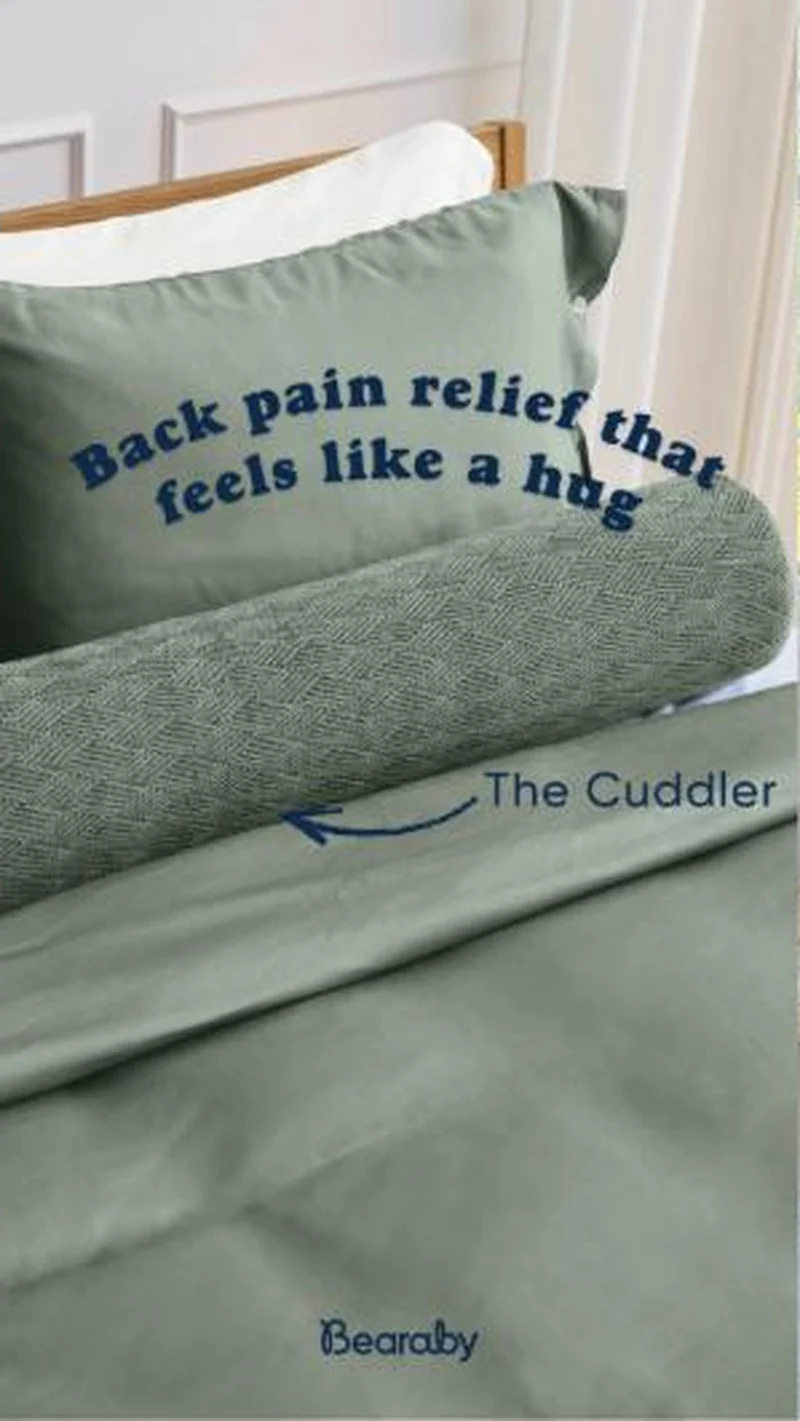 Bearaby A sage bolster arrowed The Cuddler, sold on back pain relief, lands on the right pillow page under a Back to School college essentials panel.
 Jolie Five of seven live statics run one student angle, and three of them go to a dedicated student page while the other two go to the same product page as everything else.
Does your own handoff survive the click?
This is the same read I run on live funnels: the ad, the page, and the gap between them. Scored, free, no call required.
Audit my store freeNew teardowns as they land, in Commerce Dispatch: the ad, the page it clicked to, and what the gap cost. Same free newsletter as the footer, no separate list.
Back to The Handoff, the full library of 253 teardowns, 226 of them ad and page pairs, filterable by objective, funnel stage, format, placement, category and persuasion mechanic.
Read next: what breaks, across every rated pair, drawn from every pair in this library.
Ruggable is named here solely to identify the advertising being analysed. Brand names and marks are the property of their respective owners. No brand shown has any affiliation with, or has endorsed, Taylor Sicard Consulting.