Gymshark · Conversion / Purchase · Cold / prospecting · August 2026 · Handoff: Break · By Taylor Sicard
Gymshark ad teardown: The arrival tee
Gymshark runs one split-card template across its whole range and lets the entry price, not the product, do the arguing.
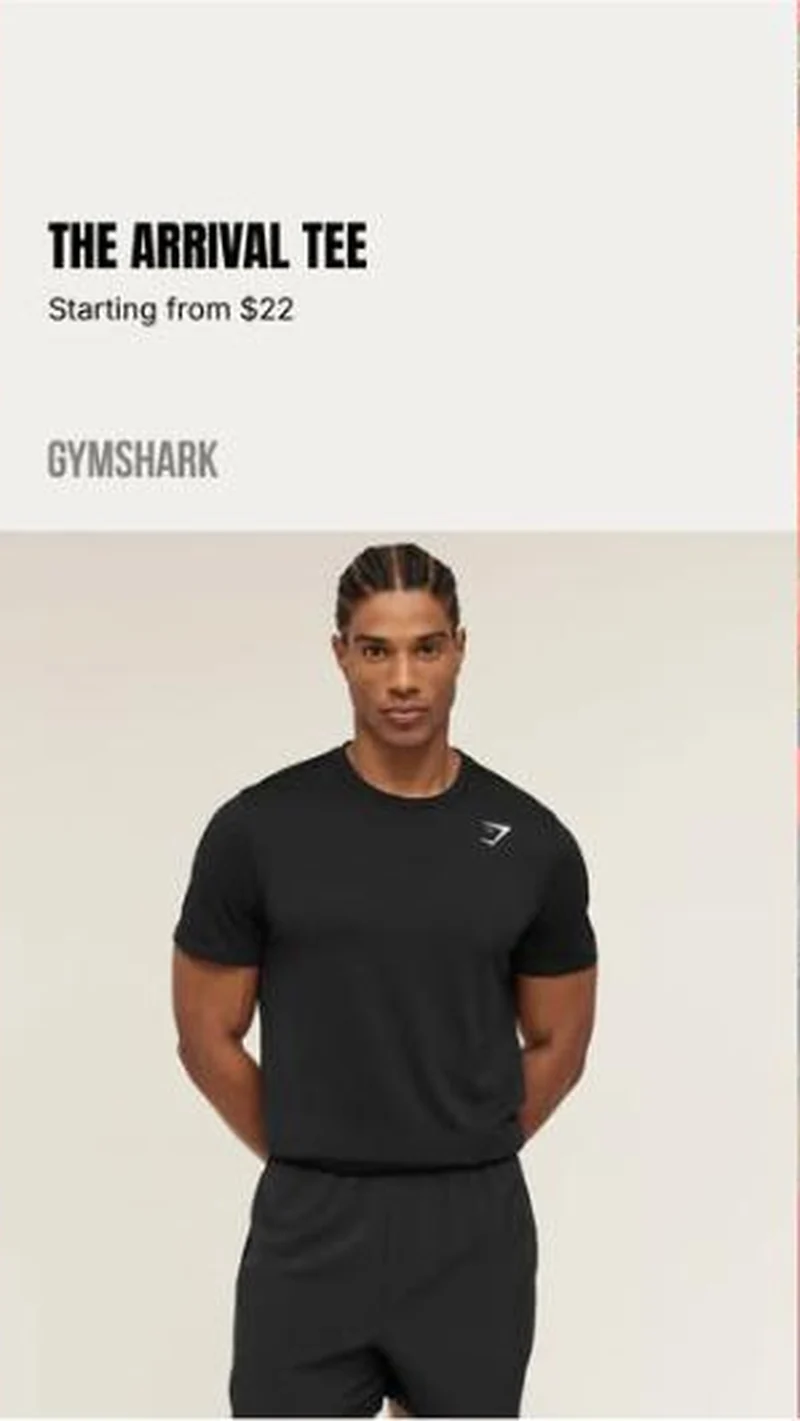
“THE ARRIVAL TEE”
Handoff: Break
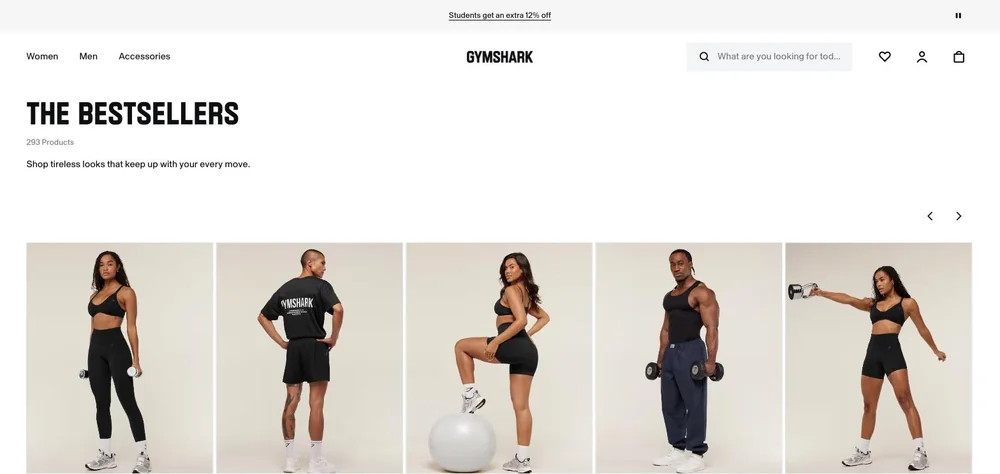
The ad panel reads "THE ARRIVAL TEE" over "Starting from $22" with a cream-backdrop packshot of the black tee, so the promise is one named garment at one entry price. The page opens on "THE BESTSELLERS", "293 Products", "Shop tireless looks that keep up with your every move.", and the Arrival Tee is not in the visible carousel; the only men's tee on screen is a back view of a black GYMSHARK graphic tee. No price appears anywhere in the first screen, so the $22 that does all the arguing in the ad is not findable at arrival, and the only price language on the page is the rotating bar reading "Students get an extra 12% off". The ad's $22 is unqualified and this capture geo-resolved to Canada, but currency is beside the point here because the page shows no figure at all to compare it against.
The read
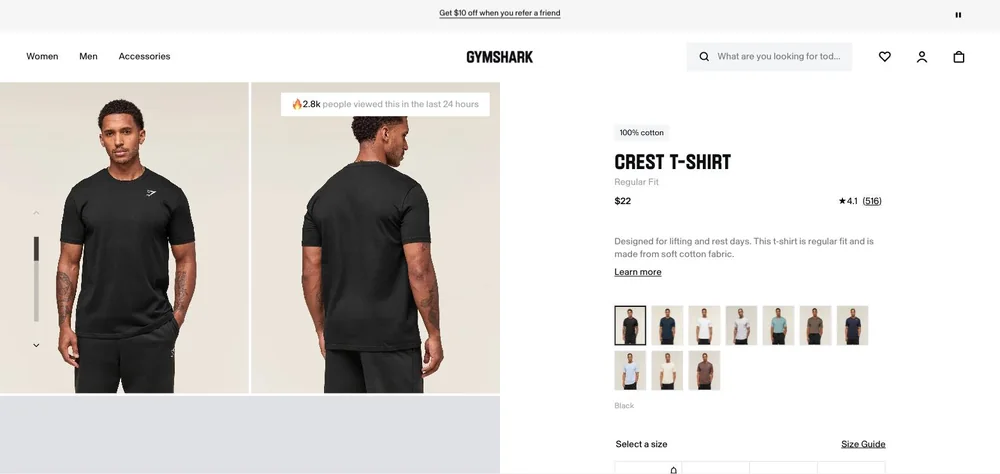
A card cut horizontally in two. The top third is flat off-white carrying three elements and nothing else: the product name in heavy condensed caps, "THE ARRIVAL TEE"; a plain line of body text, "Starting from $22"; and the GYMSHARK wordmark set small and grey. The bottom two thirds is a cream studio packshot, model face-on, hands at sides, garment unobstructed. Six products run through the identical template at different numbers. The Crest Tee at $22, Arrival Shorts at $26, Element Baselayer at $28, Sport Shorts at $38. Two womenswear cards break the pattern by swapping the price line for a benefit line, "Comfort that moves with you, all day long", and by using a lifestyle frame in place of the packshot. Body copy stays one line and repeats the number: "Train smarter, move sharper. The Arrival Tee keeps your form in check. Starting from $22."
What the ad does
- A proper noun is the entire hook. The top third carries "THE ARRIVAL TEE", "Starting from $22" and a small grey wordmark, and no benefit claim at all. That works only for a brand whose product names already circulate, and it turns the ad into a shelf tag: no persuasion offered, and no ambiguity about what is being sold.
- "Starting from" sets a floor, not a price. The identical panel runs at $22 for the Crest Tee, $26 for Arrival Shorts, $28 for the Element Baselayer and $38 for Sport Shorts, so the headline number is the cheapest way into a range rather than the cost of the garment photographed beneath it.
- Two cards in the set argue something else entirely. The womenswear versions drop the price line for "Comfort that moves with you, all day long" and put a lifestyle frame where the packshot goes. One template is therefore making a price argument to men and a comfort argument to women, which is a segmentation decision hidden inside a production shortcut.
Objective fit
Conversion / Purchase. A named product at a named price with a catalogue photograph is a bottom-of-funnel unit pointed at a curated collection page rather than at a PDP, which suggests the job is to open the range at a known low number rather than to sell the specific tee in the picture.
Gymshark ran this conversion creative to the landing page it clicked through to, both captured August 2026. Gymshark runs one split-card template across its whole range and lets the entry price, not the product, do the arguing. Read as a pair, the handoff rates break.
- A proper noun is the entire hook. The top third carries "THE ARRIVAL TEE", "Starting from $22" and a small grey wordmark, and no benefit claim at all.
- "Starting from" sets a floor, not a price.
- Two cards in the set argue something else entirely. The womenswear versions drop the price line for "Comfort that moves with you, all day long" and put a lifestyle frame where the packshot goes.
- Where the handoff lands: The ad panel reads "THE ARRIVAL TEE" over "Starting from $22" with a cream-backdrop packshot of the black tee, so the promise is one named garment at one entry price.
- What to fix: Send a price card to the thing it prices.
Ad captured by Taylor Sicard 2026-08-19, landing page 2026-08-20. Screenshots reproduced for commentary and criticism.
Tagged
- Objective
- Conversion / Purchase
- Funnel
- Cold / prospecting
- Format
- Static imageListicle static
- Placement
- Meta feedInstagram stories
- Category
- Apparel & Accessories
- Mechanic
- Price anchoringSpecificityObjection handling
- Handoff
- Break
- Brand
- Gymshark
Specificity is #2 of 21 ranked mechanics, on 83 pairs. See where specificity ranks
How this was evidenced
- Evidence
- Pair captured The ad and the page it clicked through to were both captured first-hand, and the destination recorded is the page the ad pointed at.
- Ad creative
- Captured August 2026
- Destination
- https://www.gymshark.com/collections/must-have Captured August 2026. Advertisers change their ads and pages continuously, so the live page may differ from the capture above. That is expected, and the capture is the record.
- Region
- Shows a CA/US region interstitial before the page content for non-US readers.
- Ad Library
- Ad ID 36549697171341067
Variants of the same system (2)
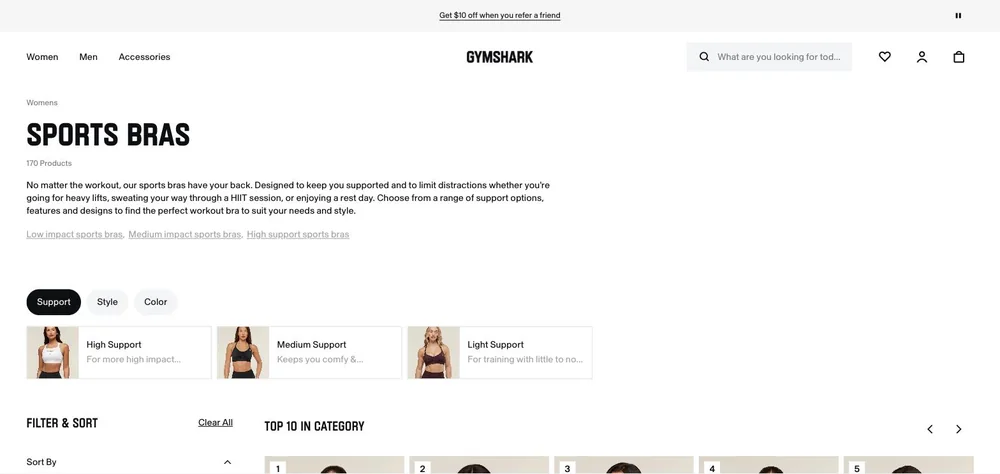
The template is destination-flat. Menswear price cards and the womenswear benefit cards run to different collection pages, and a separate set of undressed catalogue packshots with no panel at all runs to raw Shopify product URLs on a gymsharkusa.myshopify.com domain rather than to gymshark.com. Observed 2026-08-19.
What to fix
Send a price card to the thing it prices. A shopper arriving from "Starting from $22" lands on "THE BESTSELLERS" and "293 Products" with no price in the first screen and no Arrival Tee in the visible carousel, so the number doing all the arguing cannot be reconciled until two clicks later. Anchor on a floor and then hide every figure behind a collection page and the anchor works against the brand.
One of 38 pairs where the ad sold one thing, the page shows the whole shop. See the pattern · See all 38
Sources
More from Gymshark (2)
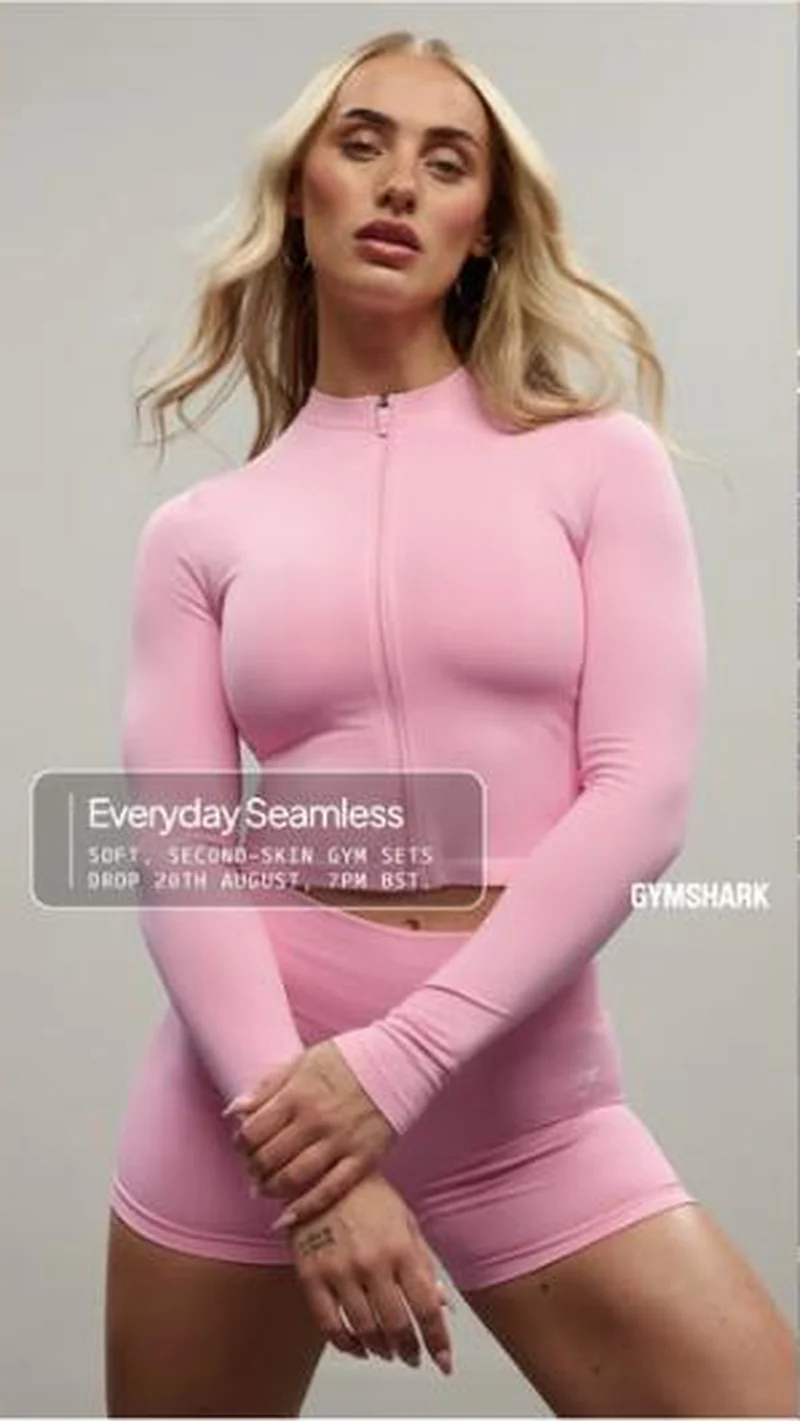 Traffic / ClicksGymshark gives a basics restock the machinery of a sneaker drop, down to the minute, and the date on the image does not match the date in the copy.
 AwarenessA third of Gymshark's captured set carries no headline, no price and no call to action, just gym photography and the wordmark twice.
The same play elsewhere
Same objection handling, different brands.
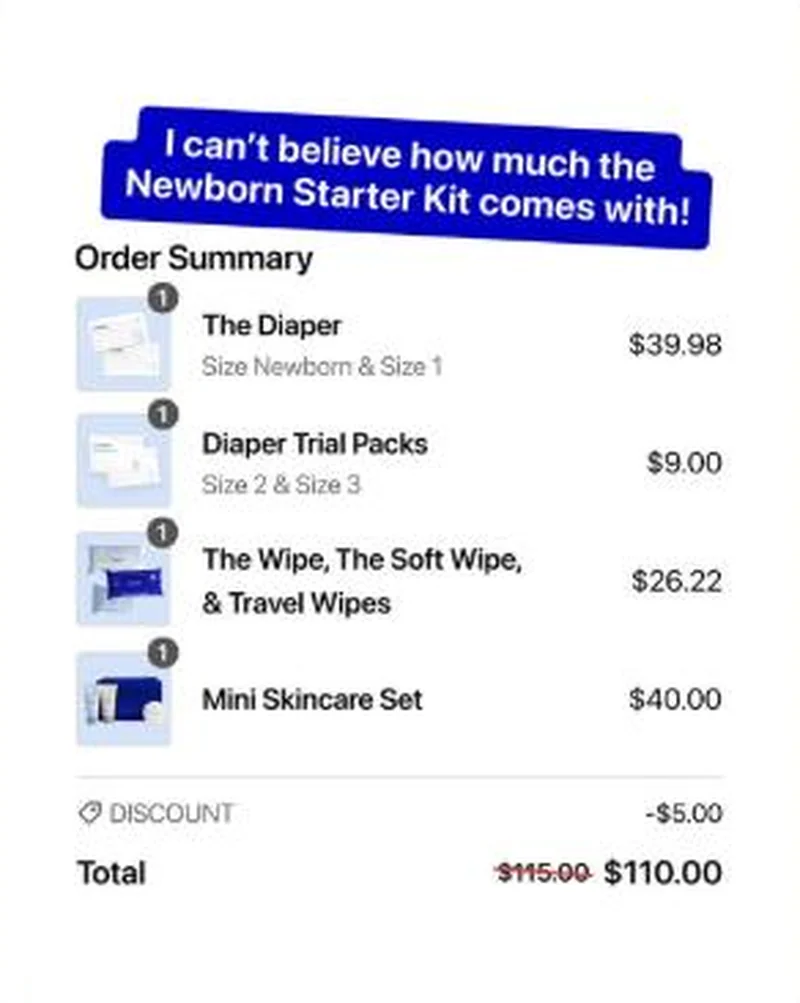 Coterie A fake order receipt itemises a $110 bundle line by line, letting the shopper do the addition instead of being told it is good value.
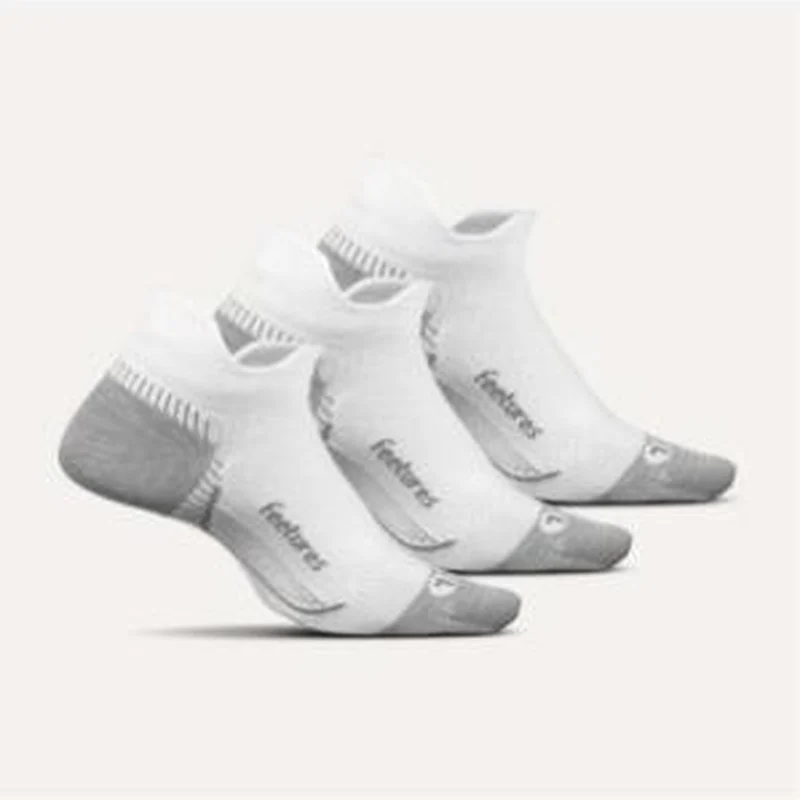 Feetures A plain three pack packshot selling a bundle saving, landing on a product page that offers a different 15% on different terms.
 Briggs & Riley A bare product cutout with no copy on it lands on the right spinner PDP, then a $500 sweepstakes modal covers the price and the buy button.
 BÉIS A tote photographed from the passenger seat, already stowed under the seat in front, sold on the one dimension that decides the purchase.
Does your own handoff survive the click?
This is the same read I run on live funnels: the ad, the page, and the gap between them. Scored, free, no call required.
Audit my store freeNew teardowns as they land, in Commerce Dispatch: the ad, the page it clicked to, and what the gap cost. Same free newsletter as the footer, no separate list.
Back to The Handoff, the full library of 253 teardowns, 226 of them ad and page pairs, filterable by objective, funnel stage, format, placement, category and persuasion mechanic.
Read next: how DTC promotions survive the click, drawn from every pair in this library.
Gymshark is named here solely to identify the advertising being analysed. Brand names and marks are the property of their respective owners. No brand shown has any affiliation with, or has endorsed, Taylor Sicard Consulting.