Across 2020 to 2026, 182 consumer brand shutdown and distress events are logged here, each one dated, and 163 of them link to their source. Beauty is the largest category at 32.4% of the total. Distress entries make up 54.9% and shutdown entries make up 29.1%. Totals reflect how much was found.
- Beauty leads the mix at 32.4%, and Food & bev follows at 22.5%.
- Each year before 2026 has its own page with every entry, month by month.
How to read
these counts.
Read each yearly figure on this page as events logged: the consumer brand shutdown and distress events that have been found and dated for that year. Sourcing got much better over 2020 to 2026, so a larger total in a later year mostly reflects how much more was found. The page never sets one year's total against another's for that reason.
There is no outside census of consumer brand shutdown and distress events to measure coverage against, so the size of that effect is unmeasured here. On the acquisition side, where outside counts do exist, the share of R.L. Hulett's pet count held in these ledgers runs from 1% in 2025 to 6% in 2023.
Several kinds of entry are listed here, and the type column names each one. A shutdown is a brand that stopped trading. Distress covers bankruptcy filings and assignments for the benefit of creditors. A distressed sale is a brand bought out of distress, often still trading under its new owner, so it also appears on the exits tracker. A curated listing is a brand placed here by editorial judgment, such as a rescue financing read as a distress signal.
What holds up across years is the mix inside each year: which categories, what sizes, and who was involved. A month with no table means nothing was found for that month. 182 events logged resolve to 180 distinct events, because an event logged at announcement and again at completion keeps both entries.
This is the uncomfortable companion to the 2026 wave of consumer brand acquisitions. For every brand that sold at a rich multiple in 2026, another quietly ran out of runway, closed its checkout, or sold its assets for a fraction of what it once raised. I track both because the buy side taught me they are the same story read from opposite ends: the levers that earn a premium are the same ones whose absence ends a brand.
Let me be clear about the tone up front, because failure is not a spectator sport. Real people lost jobs when Francesca's liquidated and when Cover FX went dark. The point of a tracker like this is to learn, not to gawk. Every brand on this page sent signals before it failed, and those signals are readable in your own numbers if you know what to look for. That is the value here, and it is the only reason I keep the ledger.
The macro backdrop is real. Retail Dive has argued flatly that the era of the DTC brand as it was hyped in 2019, when Casper, Away, and Glossier all carried billion-dollar valuations, is over. The cheap capital that funded that era dried up, acquisition costs on social platforms climbed, the cost to fulfill an online order rose, and a lot of brands hit a growth ceiling the model could not fund its way through. That thesis plays out brand by brand below, with dates and dollar figures attached.
Two framing notes before the table. First, distress comes in three flavors, and lumping them together hides the lesson: a full shutdown, a restructuring the brand survives, and a fire-sale where the assets change hands cheaply. Second, this is a living page. The window runs from January 2020 to the latest update, and it grows as new events land. Where a figure is reported by trade press rather than confirmed by a filing, I say so. Nothing here is invented.
The 2026 consumer brand
distress tracker.
Here is the core of the page: the notable consumer and DTC brands that shut down, restructured, or sold out of distress in 2026, month by month, with earlier years on their own pages. By September 20, 2026, the 2026 cut had logged 40 brands, from indie beauty to a public footwear company, a public mattress maker, a 159-year-old whiskey house in receivership, and a 49-year-old Napa winery, and each row has a date, an outcome, and a source. It is not exhaustive. These are the failures big enough to matter and clean enough to source. The category commentary that follows unpacks why each cluster happened.
| Brand | Category | What happened | Asset buyer | Source |
|---|---|---|---|---|
NoBull BurgerSep 29, 2026 · 15-year-old Charlottesville whole-food veggie burger brand sold in 1,000+ stores; closure announced in a Facebook post dated Sep 29. | Food & bev | Shutdown | greenqueen.com.hk | |
The OutsetSep 28, 2026 · Scarlett Johansson's clean skincare brand, launched March 2022, rolled out to 500 Sephora doors then exited the retailer. Site says it "has made the decision to wind down operations"; existing orders fulfilled. Backed by The Najafi Companies (reported $5M to $10M), Beliade, Plus Capital. Heavy discounting (up to 50% off) in the weeks before. | Beauty | Shutdown | beautyindependent.com | |
BRI NutritionSep 24, 2026 · Same Chapter 7 auction as Body Merry (SHR Capital Partners LLC / GOGO Tech II LLC, D. Del.), run by Auction Advisors. Outcome not found. | Wellness | Distress | buyer not found | globenewswire.com |
Body MerrySep 24, 2026 · Zoom auction by Auction Advisors in the Chapter 7 cases of SHR Capital Partners LLC and GOGO Tech II LLC (D. Del.): IP, customer lists, goodwill. Auction announced Sep 1; Sep 24 is the auction date. Outcome not found. | Beauty | Distress | buyer not found | globenewswire.com |
Designers GuildSep 24, 2026 · Interpath appointed administrators Sep 24; 93 redundancies, King's Road store plus e-commerce. The trading company operated under licence from Dunelm, which bought the brand IP in 2025; Sanderson Design Group has since signed a 10-year global licence to revive the brand. | Home | Distress | theretailbulletin.com | |
Gundlach BundschuSep 23, 2026 · One of California's oldest wineries (operating company Vineburg LLC; also Abbot's Passage). About $17.2M assets against $39.1M liabilities; American AgCredit owed $8.8M, Tiverton $18M (disputed). Overleveraged by the 2020 Madrone / Glen Ellen purchase; staff cut from 120 to 63. Family expects to keep a minority stake. | Food & bev | Distress | unnamed possible new investor | pressdemocrat.com |
Glens of Antrim PotatoesSep 21, 2026 · Northern Ireland potato and crisps maker founded 1972 (Glens of Antrim Crisps). Interpath appointed administrators Sep 21; 95 staff made redundant, "no solvent options available"; administrators seeking interest in the assets. | Food & bev | Distress | thegrocer.co.uk | |
BlipSep 17, 2026 · Closure announced on the brand's own website and social channels. Launched 2023, reached 7,000+ doors (CVS, Walmart, Walgreens, Target). Raised roughly US$5M in 2022 from Maveron, BBG Ventures, SoGal, True Equity and LAGO. | Wellness | Shutdown | beautyindependent.com | |
ElaluzSep 17, 2026 · Site shows an "out for a quick touch-up" holding state with no products purchasable. Luxury Brand Partners still lists Elaluz as a portfolio brand and did not comment. This is a pause, and logging it as a closure would be the error this page exists to avoid. | Beauty | Distress | Source pending | |
FaaceSep 17, 2026 · Distressed exit, completed. Hormonal-skincare brand founded 2019 by Jasmine Wicks-Stephens (products targeting stress, menopause, periods, tiredness, perspiration; Dragons' Den 2024 investment from Steven Bartlett, Peter Jones and Touker Suleyman). Put up for sale July 2024; a prospective sale collapsed and the founder confirmed in July 2025 the brand would close; a new deal was floated in December 2025 with nothing signed. Operations had been significantly scaled back for two years. The founder states the sale was "not a lucrative deal" for her and that she retains some involvement. Neither | Beauty | Distressed sale | theindustry.beauty | |
InBloomSep 17, 2026 · The publication says the brand "appears to have shut down". Website non-operational, social silent since July 2025, and the brand did not respond to comment requests. There is no filing, no company statement and no confirmed date, so none is invented here. Launched 2020 via Syllable (backed by The Craftory); entered 450 Whole Foods in 2024. | Wellness | Shutdown | Source pending | |
Penn BrewerySep 14, 2026 · Asset purchase agreements signed; final transfer of assets is subject to Pennsylvania Liquor Control Board approval, and the group has already stepped in to manage the brewery pending that approval. Operational control has transferred, legal title has not. Chronology: Penn filed Chapter 11 on 2026-03-31 listing liabilities of $1M to $10M, largest creditor First Commonwealth Bank at roughly $5.1M; related entity Arkham Realty, connected to then-owner Stefan Nitsch (who bought Penn in 2022), also filed, putting the Troy Hill property at risk of sheriff's sale, and the auction was avoided; | Food & bev | Distressed sale | Local investor group led by John E. Graf (CEO and president, Priory Hospitality Group) and Eric Heinauer (formerly Wigle Whiskey, Straub, Iron City, and Penn Brewery itself across two stints from 1996 | breweriesinpa.com |
Anisa BeautySep 9, 2026 · NET-NEW. Makeup brush brand winding down after seven years, announced on Instagram Sept 9; keeps selling through end of 2026. Parent Anisa International (founder Anisa Telwar Kaicker) refocuses on its manufacturing business. Reasons given: US tariffs on Chinese goods, soft makeup category, cheap brushes on TikTok and Amazon, slow replenishment, cost of acquiring DTC customers. Not an insolvency. | Beauty | Shutdown | beautyindependent.com | |
BeautyBioSep 8, 2026 · Nu Skin has wound down the skincare device and topical brand it bought for USD 75M in 2023, three years in. Q1 2026 BeautyBio sales fell nearly 67%; the brand's site now directs customers to Amazon. Wind-down carries a USD 1.8M impairment inside USD 5.9M of total charges, after a USD 25.1M impairment last year; as of 31 March Nu Skin disclosed BeautyBio had no remaining carrying value. Founder Jamie O'Banion stepped down as CEO in 2024; the brand reportedly passed USD 110M in retail sales in 2019. Context for the deal tracker: Nu Skin's core beauty and wellness segment did USD 271.2M in Q2, do | Beauty | Shutdown | Nu Skin Enterprises (owner, winding the brand down) | beautyindependent.com |
Summit Brewing CompanySep 8, 2026 · Not a closure and must not read as one. BMO filed a foreclosure lawsuit in Ramsey County District Court seeking foreclosure of 910 Montreal Circle and appointment of a general receiver. A receiver has been requested, not granted, and no hearing was scheduled as of 2026-09-15. Chronology: Summit could not pay when the revolver matured at end-2025; a forbearance agreement was entered January 2026 with a 2026-07-31 payoff deadline; on 2026-06-15 Summit told BMO it would lack liquidity; BMO dissolved the forbearance in August 2026 and demanded repayment in full, then sued. Operating stat | Food & bev | Distress | BMO Bank N.A. (plaintiff, not a buyer) | brewbound.com |
The LimitedSep 8, 2026 · Ends Sycamore Partners' ownership, which began after the brand's 2017 retail bankruptcy. Buyer group already owns New York & Company and Fashion to Figure, so this is a third mall-era women's label into the same operator. Plan is product, quality and digital commerce, not stores. Terms not disclosed, no revenue base given, no bankers named | Apparel | Distressed sale | Investor group led by Harry Adjmi | Source pending |
Nöa & NaniSep 3, 2026 · NET-NEW. BDO appointed administrators Sept 3 per a Gazette notice. Kent furniture brand, founded 2013, sells DTC and via Argos, B&Q and Debenhams; clearance sale at up to 80% off. No reason, buyer or trading status given. Reported by Brit Brief Sept 7. | Home | Distress | britbrief.co.uk | |
TwinlabSep 2, 2026 · Definitive asset purchase agreement for the operating assets and brands of Twinlab, conducted through an assignment for the benefit of creditors (ABC) proceeding, subject to court approval. Founded 1968; roughly 50,000 retail outlets including Vitamin Shoppe and GNC plus Amazon. cbdMD says the combined unaudited TTM revenue to June 2026 is approximately US$30M, an increase of approximately 40pct over its standalone figure, which implies a standalone base near US$21.5M and a Twinlab contribution near US$8.5M to US$9M, a fraction of what the brand once did. Stated rationale: reduce hemp-category | Wellness | Distressed sale | cbdMD, Inc. | prnewswire.com |
Chobani equity stake held by Keurig Dr Pepper, plus KDP's Allentown, PA manufacturing facility and warehouseSep 1, 2026 · KDP sells its full equity stake in Chobani back to the company for US$800M. In a related transaction Chobani acquires KDP's Allentown, Pennsylvania manufacturing facility and warehouse for approximately US$125M, including the facility lease, equipment and operations. Chobani will continue to co-manufacture certain products for KDP at Allentown for a defined period post-close. Both transactions expected to close in Q3. KDP applies net proceeds to debt reduction as it positions its two future businesses, Beverage Co. and Global Coffee Co. Note the two figures in circulation: US$800M is the stake | Food & bev | Distressed sale | Chobani, buying back from Keurig Dr Pepper | Source pending |
| Brand | Category | What happened | Asset buyer | Source |
|---|---|---|---|---|
Southern MotionAug 31, 2026 · Mississippi recliner maker Southern Motion filed Chapter 11, citing weak housing-driven demand, tariff and freight cost inflation and an above-market master lease across six facilities, about nine months after Man Wah Holdings bought its parent. | Home | Distress | finance.yahoo.com | |
Signorello EstateAug 27, 2026 · NET-NEW. 49-year-old Napa winery filed Chapter 11 in N.D. Cal. (Santa Rosa) Aug 27, the day before a scheduled foreclosure sale. 2017 Atlas Peak fire, 2020 smoke damage, insurance disputes. Continues operating. Offer rose from $16M to $20M ($16.5M cash plus DIP loans) per Napa Valley Register Aug 31. | Food & bev | Distress | Stalking-horse interest from Amar Doman and Ashley Cooper (DIP lenders), about $20M including DIP funds | thestreet.com |
Stone BrewingAug 27, 2026 · BACKFILL CATCH, consequence of the row above. Sapporo USA is shuttering three Stone Brewing facilities in Escondido, California and laying off approximately 220 workers, first cuts in October, per a WARN notice filed with the state. First phase hits brewers, technicians and warehouse and logistics staff. Sapporo is consolidating all US brewing into one facility in Richmond, Virginia. Useful context on the sector: craft production fell 4% last year with 60% of breweries declining. | Food & bev | Shutdown | Sapporo USA | fooddive.com |
Stone BrewingAug 27, 2026 · Sapporo moved to close Stone Brewing's California brewery and sell the business. [headline-level] | Food & bev | Distress | fooddive.com | |
Prime Capital Investments Inc, parent of the Beach Day Every Day (BDED) brandAug 26, 2026 · PCI produces, bottles and sells alcoholic and non-alcoholic beverages, with BDED on its client roster. Founded 2020, growth followed expansion into Quebec SAQ stores. Structured as a related-party transaction under MI 61-101: Raimondo Messina and Dominique Primeau are directors of Prime, PCI and Affichage. Exempt from formal valuation and minority approval because neither the securities issued nor the consideration exceeds 25pct of Prime's market cap. Classified a Major Acquisition by the CSE but not a Change of Control. Conditions include due diligence by October 15 2026, audited PCI stat | Food & bev | Distressed sale | Prime Drink Group Corp (CSE: PRME) | globenewswire.com |
ASL Solutions (Dog Palace, CRB Palace, RB Palace, DP Hunter)Aug 25, 2026 · Escalade, the sporting goods, safety and indoor/outdoor recreation manufacturer, acquired the assets of ASL Solutions, an Illinois-based maker of premium insulated dog and cat houses and accessories. Branded product lines include Dog Palace, CRB Palace, RB Palace and DP Hunter. Framed by Escalade as expanding its outdoor and fitness manufacturing footprint. Judgment call on scope: this sits closer to pet hardgoods than to a consumer nutrition or care brand, and it is adjacent to the standing exclusion for pure manufacturing-asset deals (the Petsource facility, excluded 2026-08-31). It is l | Pet | Distressed sale | Escalade, Inc. | prnewswire.com |
IT Cosmetics (China)Aug 21, 2026 · IT Cosmetics is closing its Tmall Global flagship store, the brand's only official online purchasing channel in China, effective September 2, 2026. The store is already unsearchable and its products have been pulled. Local brand activity had been winding down for some time, with WeChat, Weibo and Xiaohongshu updates ending by early 2025. This is a single-channel and single-market withdrawal, not a brand shutdown: IT Cosmetics remains a leader in US prestige complexion. L'Oreal acquired the brand for US$1.2 billion in 2016. | Beauty | Shutdown | Not applicable | Source pending |
Rebel CreameryAug 18, 2026 · Keto and low-sugar ice cream brand filed for Chapter 11, roughly a month after losing a $23.8M judgment to Van Leeuwen. Court documents show $23.85M in declared debt against total assets of only $13.8M, with about $5.2M in cash, and name Van Leeuwen as the largest creditor. The judgment is effectively the entire liability: the litigation loss, not operating performance, is what put the balance sheet underwater. A rare case of a consumer brand killed by a single legal outcome rather than by CAC, channel economics or a failed raise, which is worth keeping separate from the demand-side shutdowns | Food & bev | Distress | nosh.com | |
MUD JeansAug 14, 2026 · Circular denim brand MUD Jeans entered bankruptcy, reported in Retail Dive's weekly roundup. [headline-level roundup item] | Apparel | Distress | retaildive.com | |
Unwell BeveragesAug 13, 2026 · Alex Cooper's beverage line, launched in 2025 in partnership with Nestle and distributed through Target, is winding down. Announced one day after Unwell's media arm was valued at $500M. The clean read: the audience monetises through media and advertising, not through a shelf-stable can competing on Target planograms against funded functional-beverage brands. Another data point in the creator-beverage failure column alongside the broader 2026 shakeout. | Food & bev | Shutdown | bloomberg.com | |
Digital Brands Group (Nasdaq: DBGI)Aug 6, 2026 · NET-NEW, and it updates the Aug 3 strategic-review row already in this log. The offer arrived days after the review was announced. The stock opened Thursday at $13.97, so the bid is roughly a 5.5x premium to market, which is extreme enough that it should be treated with real caution until a firmer source or an 8-K confirms it. Board is consulting its adviser, no deadline set | Apparel | Distressed sale | An unnamed existing shareholder said to have net worth above $1B | retaildive.com |
FekkaiAug 6, 2026 · Fekkai halted DTC, went out of stock on its own site and redirected shoppers to Macy's and Amazon. Not a shutdown, but a retrenchment worth a distress watchlist. | Beauty | Curated listing | beautyindependent.com | |
Fekkai (holding company Blue Mistral, with Cornell Capital)Aug 6, 2026 · NET-NEW. Fekkai has halted direct-to-consumer sales, telling customers on May 29 that its DTC assortment is sold out and unavailable and directing them to Macy's and Amazon, with no reason given and no commitment to return. Only two products remain on Ulta's site. Sister brand Bastide shows the same out-of-stock state. Ownership history: P&G bought the brand in 2008, it changed hands in 2015, and Frédéric Fekkai bought it back in 2018 with Cornell Capital. The email predated the public release of testimony in which Jeffrey Epstein's former assistant accused Fekkai of sexual abuse, allegations | Beauty | Shutdown | beautyindependent.com | |
Flyte.70Aug 6, 2026 · Flyte.70 shut down, citing the economic and political climate. | Beauty | Shutdown | beautyindependent.com | |
HoliFrogAug 6, 2026 · NET-NEW and a rare, useful data point: what happens after a small beauty deal goes wrong. Following the February 2026 sale, the buyer alleged the sellers provided inaccurate information during the sale process, citing a sharp decline in sales to a major customer group after closing. The sellers filed first, deny the allegations, and characterize the claim as buyer's remorse. Case ongoing in the U.S. District Court for the Southern District of Texas. The pattern to note is concentration risk in the diligence: a single customer group moving post-close was enough to trigger an unwind threat. | Beauty | Shutdown | Corporate records list Holly Ceplikas, formerly of Propel Equity and Essex Bay Capital and co-owner of Parzona LLC, as organizer and director of HoliFrog, Inc. | beautyindependent.com |
Hyper SkinAug 6, 2026 · NET-NEW, a shutdown-tracker item. Founder Desiree Verdejo said on Instagram that the brand is closing its digital storefront after being unable to secure capital over the past year, and is in discussions with a short list of potential partners to determine whether it can continue. Founded 2019, went through Sephora's Accelerate program in 2021 and launched at Sephora later that year. Verdejo, a former lawyer, also owns the Harlem retailer Vivrant Beauty. A brand with Sephora distribution failing on capital access rather than demand is the clearest read yet on how tight the small-beauty funding | Beauty | Distressed sale | beautyindependent.com | |
Hyper SkinAug 6, 2026 · Hyper Skin paused operations after failing to secure capital and is exploring partnership options. A live distressed-asset situation rather than a completed wind-down. | Beauty | Distress | beautyindependent.com | |
QVC Group, Inc. (Nasdaq: QVCG)Aug 6, 2026 · NET-NEW and tracker-worthy. QVC completed a prepackaged Chapter 11 in under four months. David Rawlinson, president and CEO since 2021, steps down. Mike George, who ran QVC for 16 years to 2021, returns as interim chief and board chair. Common stock approved for Nasdaq trading under QVCG. A capital structure reset rather than a demand fix, so the question is whether the operating decline was ever a leverage problem. | Other | Distress | prnewswire.com | |
Trak RacerAug 5, 2026 · NET-NEW. Corsair takes the full Trak Racer business, a designer and manufacturer of premium racing and flight-simulation cockpits, frames, seats, monitor stands, motion systems and accessories. Consumer hardware consolidation under a public brand house | Other | Distressed sale | Corsair Gaming (Nasdaq: CRSR) | businesswire.com |
Grain & Barrel Spirits brand portfolioAug 4, 2026 · NET-NEW. Brand-asset purchase headlined by Chicken Cock Whiskey, the 170-year-old bourbon Grain & Barrel revived in 2012, taken alongside Dixie Vodka, High Goal gin, EG Booz whiskey and Eterno Verano tequila from the Charleston, South Carolina portfolio. This is the third spirits consolidation we have logged in 2026 after No Sleep Beverage's simultaneous three-brand roll-up on Apr 13 and Sazerac's stake-plus-distribution pattern with 818 Tequila and SIPMARGS. The through-line is that craft spirits brands are being bought for their brand equity and shelf position by operators who already have p | Food & bev | Distressed sale | Next Century Spirits | prnewswire.com |
Salad and GoAug 4, 2026 · NET-NEW, a shutdown-tracker item and a backfill catch. Filed Chapter 11 on Aug 4 in the U.S. Bankruptcy Court for the Southern District of Texas, then permanently closed all 70 locations after final guest service on Aug 5. The company cited sustained pressure on consumer demand, past strategic growth challenges and rising costs. The July cyclospora outbreak weakened category confidence even though Salad and Go was never linked to a case. Founded in Gilbert, Arizona in 2013, served more than 60 million meals over 13 years. Had already closed all Texas and Oklahoma stores in January and announce | Food & bev | Shutdown | restaurantdive.com | |
AuricAug 3, 2026 · BACKFILL CATCH. Samantha Ravndahl's makeup brand, built with incubator Magic Dusk, shutting after five years; 40% off closing sale. Brand cited market conditions, unstable tariffs, rising production and shipping costs. | Beauty | Shutdown | beautyindependent.com | |
Digital Brands Group (Nasdaq: DBGI)Aug 3, 2026 · NET-NEW and the only same-day item of the run. A public DTC apparel roll-up formally putting itself in play, stated purpose to maximize shareholder value. Context that frames the price expectation: DBGI recently ran a 1-for-40 reverse split to regain Nasdaq compliance, so this is a distressed or near-distressed process rather than a premium auction. On Jul 7 its AVO label signed a placement with the largest US college bookstore chain covering 1,000-plus locations. Worth watching as a live seller in apparel, a category where Capstone counted 75 AF&A deals YTD through Jun 1, up 21% year over yea | Apparel | Distressed sale | Roth Capital Partners retained as financial adviser. Buyer unknown | retaildive.com |
| Brand | Category | What happened | Asset buyer | Source |
|---|---|---|---|---|
Menagerie CosmeticsJul 29, 2026 · Closing after eight years. Founder Samantha VanDahl clearing inventory. The event belongs to July 2026, not to the week it surfaced. | Beauty | Shutdown | Source pending | |
Align VenturesJul 28, 2026 · Logged as a capital-formation signal rather than a brand deal, consistent with how the log treats fund launches. Align closed $125M for an early-stage Fund II targeting beauty, wellness and consumer innovation, led by managing partners Ben Bryce and Grant Hosking. The exit track record is the reason to log it: Billie, Coterie, Hims, Touchland and FIGS, with current positions including Starface and OLIPOP. Align was also a co-lead on the Starface $105M minority round already in this ledger alongside Asto Consumer Partners. A $125M dedicated early-stage consumer pool closing in a market everyone | Other | Shutdown | x.com | |
Donald PlinerJul 28, 2026 · Vida acquired the Donald Pliner brand outright, all IP and brand assets, from Sunrise Brands. This is Vida's second luxury-lifestyle footwear pickup after Aquatalia in late 2024, and it fits a stated strategy of balancing owned brands against its licensed portfolio. Existing product assortment continues; investment is going into materials, construction, digital commerce, and consumer engagement. A quiet brand-asset carve-out, the kind of deal that never makes a headline count but shows the licensing houses still buying distressed or non-core name plates. | Apparel | Distressed sale | Vida Shoes International | prnewswire.com |
Republic National Distributing Company (RNDC)Jul 26, 2026 · Not a brand deal, logged because it is the largest structural event in US beverage-alcohol distribution in years and it will move the denominator under a lot of spirits brands in this ledger. RNDC, until last year the second-largest wine and spirits distributor in the country, filed voluntary Chapter 11 petitions in the Southern District of Texas to run a court-supervised sale of what remains and then wind down in an orderly way, after a year of state-by-state exits. It intends to keep meeting obligations under transition service agreements tied to previously disclosed sales of its operations. | Food & bev | Shutdown | brewbound.com | |
Sleep NumberJul 21, 2026 · Sleep Country Canada agreed to acquire Sleep Number out of bankruptcy for $700M. [headline-level] | Home | Distressed sale | Sleep Country Canada | retaildive.com |
CoveyJul 14, 2026 | Beauty | Shutdown | Source pending | |
Prime (Australia arm)Jul 7, 2026 | Food & bev | Distress | Administrator: Alice Ruhe, The Ruhe Group | Source pending |
| Brand | Category | What happened | Asset buyer | Source |
|---|---|---|---|---|
BREZJun 22, 2026 · THC and hemp beverage brand BREZ reported battling regulatory and financial crosswinds. | Food & bev | Distress | bevnet.com | |
GlossierJun 22, 2026 | Beauty | Curated listing | Tiger Finance | Source pending |
RAW SkincareJun 20, 2026 · RAW Skincare announced it would close after nearly a decade. Repeated in the week 26 and week 29 roundups. CAVEAT: rotating weekly index, not a permalink. | Beauty | Shutdown | globalcosmeticsnews.com | |
Sleep NumberJun 18, 2026 · UPDATED 2026-07-21 pm: the $415M stalking-horse bid was topped in a competitive auction; a US bankruptcy judge approved the ~$701M sale on Jul 20, with Sleep Country raising its offer by ~US$286.8M through the process. Sleep Country will run 800-plus locations and claims the No. 2 global sleep-retailer position. Closing expected by Jul 31 | Home | Distressed sale | retaildive.com | |
Sleep NumberJun 12, 2026 · Mattress brand Sleep Number filed for bankruptcy and simultaneously signed a merger deal. [headline-level] | Home | Distress | retaildive.com | |
Better Bath Better BodyJun 3, 2026 · carried over from the live shutdowns page: | Wellness | Distress | Source pending | |
Uncle NearestJun 1, 2026 · The year's most consequential distressed consumer-brand sale and previously absent from this log entirely. Receiver Phillip G. Young Jr. notified the court on Jun 1 that he had signed a non-binding LOI for substantially all assets, with a purchase agreement expected inside 45 days (window closed mid-July, no signed PA reported yet). Buyer stays anonymous under NDA until close, plans to keep the workforce. Excluded from the deal: the Edgartown MA and Cognac France properties and all Grant Sidney assets. Court approval still required. Running alongside it, the receiver has counterclaimed against | Food & bev | Distressed sale | Confidential Black-owned investment firm | bevnet.com |
| Brand | Category | What happened | Asset buyer | Source |
|---|---|---|---|---|
Miss Mouth's (via Thrasio)May 29, 2026 · carried over from the live shutdowns page: | Other | Distress | Source pending | |
Miss Mouth's Messy EaterMay 29, 2026 | Home | Distressed sale | Church & Dwight | Source pending |
KitriMay 19, 2026 · London DTC womenswear label founded 2017 (limited-run monthly drops). Founder Haeni Kim announced on Instagram that the brand will close "in the coming weeks"; remaining stock sold at up to 70% off. Joined Brands at M&S in late 2025. No funding history found. Read from TheStreet (published May 19, 2026), which relays the founder's post. | Apparel | Shutdown | thestreet.com | |
A.P. ChemMay 4, 2026 · BACKFILL CATCH. Prestige skincare brand launched 2023 by Sandra Statz and dermatologist Sherwin Parikh announced closure on social media May 4; 75% off liquidation sale. No reason given. | Beauty | Shutdown | beautyindependent.com | |
Adwoa BeautyMay 1, 2026 · BACKFILL CATCH. Textured hair care brand (founder Julian Addo, launched 2017, Sephora) filed Chapter 11 Oct 2025 in N.D. Tex.; converted to Chapter 7 May 1, 2026. | Beauty | Shutdown | Motion by Aurous Financial Services LLC (PO lender) | beautymatter.com |
PharmaSystems Inc., consumer packaged goods division (PSI CPG)May 1, 2026 · BACKFILL, never previously logged. PSI CPG supplies essential over-the-counter health and wellness products to major pharmacies and retailers across Canada. The structure is disclosed and useful as a small-cap mark: $12.0M drawn on the revolving credit facility and a $1.5M holdback from the vendors. Richards frames it as a move into front-of-house pharmacy offerings against an otherwise back-of-house portfolio, and says it expects the deal to be accretive to 2026 earnings. Richards later confirmed in its Q2 2026 results that acquisitions were the primary driver of 5% revenue growth, which corr | Wellness | Distressed sale | Richards Group (OTC: RPKIF), via Healthmark Services | newsfilecorp.com |
| Brand | Category | What happened | Asset buyer | Source |
|---|---|---|---|---|
Nomad GoodsApr 29, 2026 · BACKFILL, never previously logged. Nomad is a premium mobile-accessories and everyday-carry brand, leather cases, watch bands, key organizers and charging gear, with a strong DTC channel and a design-led brand position. UAG makes rugged patented protective cases for phones, laptops and tablets, so the fit is a premium-design brand bolted onto a rugged-utility platform, giving UAG both a step up in price architecture and a real DTC muscle it did not have. Nomad keeps its brand and its existing leadership team. Terms undisclosed. This is consolidation of the premium mobile-accessories category r | Other | Distressed sale | Urban Armor Gear (HKW) | businesswire.com |
Tally HealthApr 29, 2026 | Wellness | Distressed sale | Infinite Epigenetics (TruDiagnostic) | Source pending |
Pat McGrath LabsApr 24, 2026 · Pat McGrath Labs exited bankruptcy, reported in Retail Dive's Weekly Closeout. [headline-level roundup item] | Beauty | Distress | retaildive.com | |
Good Light CosmeticsApril 2026 · carried over from the live shutdowns page: | Beauty | Shutdown | Source pending | |
Pure Science LabApril 2026 · carried over from the live shutdowns page: | Other | Distress | Source pending | |
Kombucha TownApr 9, 2026 · Acquired out of bankruptcy; WA-state distribution | Food & bev | Distressed sale | x.com | |
Nicklaus CompaniesApr 9, 2026 · Founder reunites with the Golden Bear brand after a Chapter 11 exit | Other | Distressed sale | x.com | |
Strands Hair Care (The Hair Lab by Strands)Apr 7, 2026 · Verified Brands, tied to Merit Manufacturing CEO Madhu Natarajan, bought the Walmart-launched customization haircare brand following a 2025 secured-party foreclosure attempt, making this distress-adjacent. | Beauty | Distressed sale | Verified Brands | beautyindependent.com |
Sow GoodApr 1, 2026 · Freeze-dried candy maker Sow Good undertook asset sales and leadership turnover after a liquidity push. | Food & bev | Distress | nosh.com |
| Brand | Category | What happened | Asset buyer | Source |
|---|---|---|---|---|
Alima PureMar 30, 2026 · Mineral makeup pioneer Alima Pure, founded 2004, shut down on 30 March 2026 after 21 years. | Beauty | Shutdown | beautyindependent.com | |
AllbirdsMar 30, 2026 · Distressed sale far below prior valuations; joins the Aerosoles/White Mountain portfolio | Apparel | Distressed sale | retaildive.com |
| Brand | Category | What happened | Asset buyer | Source |
|---|---|---|---|---|
Sea MonstersFeb 18, 2026 · Seaweed snack maker Sea Monsters shut down operations. | Food & bev | Shutdown | nosh.com | |
Food52February 2026 · carried over from the live shutdowns page: | Other | Distress | Source pending | |
Barry MFeb 13, 2026 · Rival nailcare brand bought out of bankruptcy protection | Beauty | Distressed sale | x.com | |
Francesca'sFeb 11, 2026 · Altar'd State parent Stand Out For Good put in a stalking-horse bid for Francesca's in bankruptcy. The Chapter 11 liquidation plan was confirmed in September. [headline-level] | Apparel | Curated listing | Stand Out For Good (Altar'd State) | retaildive.com |
Eddie BauerFeb 9, 2026 · Eddie Bauer filed for bankruptcy and moved to close all U.S. stores. [headline-level] | Apparel | Distress | retaildive.com | |
Del Monte canned fruit & fruit cupsFeb 6, 2026 | Food & bev | Distressed sale | Pacific Coast Producers | Source pending |
| Brand | Category | What happened | Asset buyer | Source |
|---|---|---|---|---|
Pat McGrath LabsJan 29, 2026 · Pat McGrath Cosmetics in bankruptcy with a lender dispute; the brand exited Chapter 11 in April 2026. [headline-level] | Beauty | Distress | retaildive.com | |
Allbirds U.S. retail estateJan 28, 2026 · Allbirds moved to close all U.S. stores bar two outlets, two months before the $39M asset sale to American Exchange Group. [headline-level] | Apparel | Distress | retaildive.com | |
Cover FXJan 22, 2026 · carried over from the live shutdowns page: | Beauty | Shutdown | Source pending | |
Mally BeautyJan 22, 2026 · carried over from the live shutdowns page: | Beauty | Shutdown | Source pending | |
HilmaJan 16, 2026 · Wellness/supplement brand Hilma shut down, reported in Retail Dive's Weekly Closeout. [headline-level roundup item] | Wellness | Shutdown | retaildive.com | |
InkboxJan 16, 2026 · Temporary-tattoo brand Inkbox shut down, reported in Retail Dive's Weekly Closeout. [headline-level roundup item] | Beauty | Shutdown | retaildive.com | |
Stoli Group USA (Stoli vodka US owner)Jan 15, 2026 · Moved to liquidate after failing to exit the Chapter 11 case it filed in November 2024. Date (Jan 15, 2026) and the Nov 2024 filing read from the BevNET headline and meta-description via WebFetch; the article body is paywalled, so court, asset buyer and figures are NOT known. Not previously in seen.txt, so a backfill catch from Tier 4. Year confirmed from the article date and the /2026/ URL, not inferred. | Food & bev | Distress | none named | bevnet.com |
Adwoa Beauty2026 · Textured haircare brand Adwoa Beauty moved into liquidation in 2026 after filing for bankruptcy in 2025. Month not stated in the source. | Beauty | Distress | cosmeticsbusiness.com | |
GXVE Beauty2026 · Gwen Stefani's GXVE Beauty reported as a rumored closure in 2026; unconfirmed in the source. | Beauty | Shutdown | cosmeticsbusiness.com | |
Malin + Goetz2026 · Malin + Goetz entered administration in the UK and closed its UK stores during 2026. Month not stated in the source. | Beauty | Distress | cosmeticsbusiness.com |
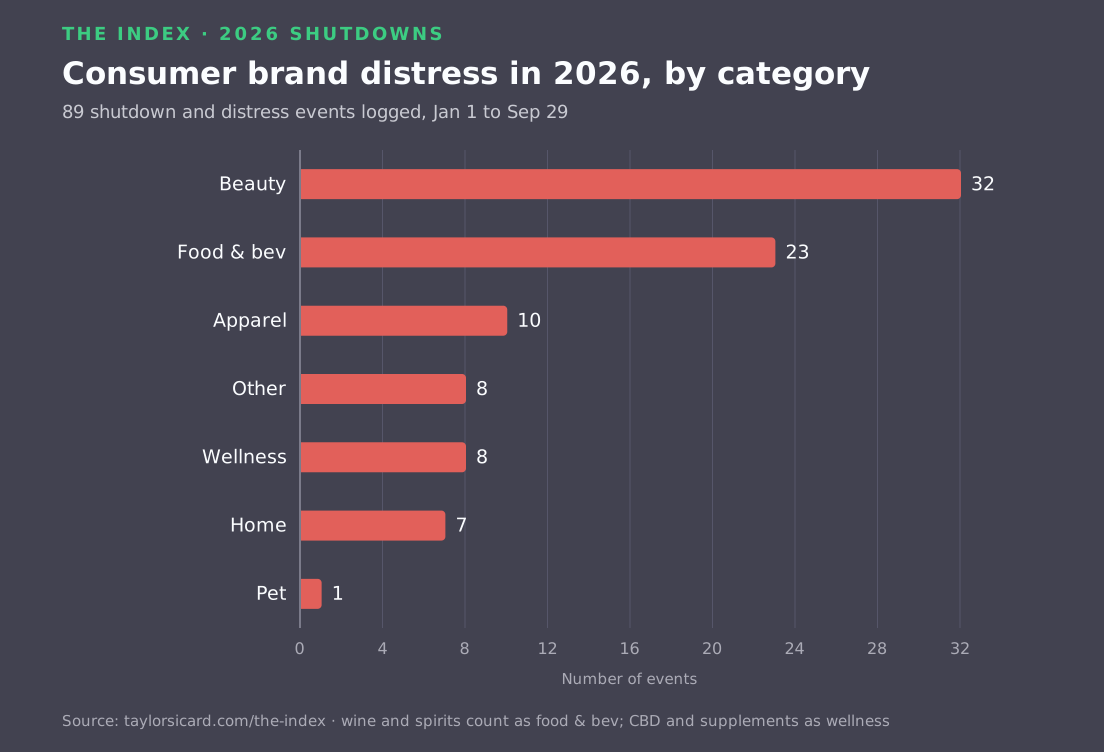
Three added in early August, none of them a clean closure. Fekkai shut its direct-to-consumer channel and kept the brand, Hyper Skin paused operations while it looks for a buyer, and Flyte.70 wound down after five years. Three different outcomes, and only one of them is a death. Two more landed in the second week of August, and they sit at opposite ends of the range. Salad and Go filed Chapter 11 on Aug 4 and closed all 70 locations the next day, the only outright liquidation in this batch. Unwell Beverages simply wound down the beverage line it launched with Nestle in 2025, a product decision rather than an insolvency, announced a day after its media arm was valued at $500M. The period's biggest insolvency, Republic National Distributing Company's Chapter 11 filing on Jul 26, is a wholesale alcohol distributor, not a consumer brand, so it sits outside this ledger. Worth watching anyway: when a distributor of that size winds down, the brands it carried lose route-to-market before they lose revenue, and the damage shows up a quarter or two later on their side of the ledger.
Seven added on September 11, and four of them end the brand. Auric and A.P. Chem shut down, Anisa Beauty is winding down while the brush manufacturer behind it carries on, and Adwoa Beauty, which filed Chapter 11 last October, was converted to Chapter 7 liquidation in May. The other three are still in process. Signorello Estate filed Chapter 11 the day before a foreclosure sale and is still operating, Twinlab's brands are going to cbdMD through an assignment for the benefit of creditors, and Nöa & Nani entered administration in the UK. Adwoa, A.P. Chem and Auric are backfills that earlier sweeps missed.
Five added on September 18, and only two of them end the brand. Blip confirmed its shutdown on its own site and social accounts, after reaching 7,000 doors and raising about $5M. Menagerie Cosmetics is closing after eight years, on a founder post dated July 29 that only reached trade coverage this week, so it is logged to July. InBloom, Kate Hudson's supplement line, is the one the source itself hedges: the site is non-operational and the social accounts have been silent since July 2025, but there is no filing, no statement and no date, and the brand did not respond to comment requests. Elaluz has paused rather than closed, and Luxury Brand Partners still lists it among its portfolio brands. Summit Brewing is not a closure at all. BMO Bank filed a foreclosure suit in Ramsey County over more than $8.2M of debt and asked the court to appoint a receiver. Nothing has been granted, no sale process is running, and the CEO says the St. Paul brewery is operating normally while the case proceeds.
On sourcing. Each row leads with a primary source, the origin record, then the trade outlet that first reported it. For bankruptcies and restructurings the primary is the court docket (the Chapter 11 or Chapter 7 filing, via the bankruptcy court, its claims agent, or PACER). For public companies it is the SEC filing (a Form 8-K or IR statement) or a regulatory RNS. For a privately held brand that simply closed, the origin is the company's own statement. Trade press sits second as confirmation, and where a figure rests on reporting rather than a filing, the row says so.
A few brands sit just off the table because they are retailers more than product brands, but they belong in the same weather system. Malin and Goetz closed its UK stores, Beauty Bay filed a notice of intent to appoint administrators, and Claire's UK collapsed into administration again, all in the first half of 2026 per Cosmetics Business. The distress was not confined to any one corner of the shelf. It ran from indie K-beauty to legacy mall accessories.
A second tier sits off the table for a different reason: the companies behind the shelf rather than on it. Vi-Jon, the 118-year-old maker of Germ-X and Swan Epsom Salt, filed Chapter 11 in Delaware on August 2 against $500M to $1B of debt, but it filed to implement a talc-liability settlement rather than because the business stopped working, which makes it a different animal from every row above. Republic National Distributing filed Chapter 11 in late July and is winding down what was until last year the second-largest wine and spirits distributor in the country. QVC Group came out of a prepackaged Chapter 11 on August 6 with $5.3B of debt erased. None of them are consumer brands in the sense this page uses, but all three move the ground under brands that are. Stone Brewing is a different case again: the brand lives on under Firestone Walker and Duvel, which bought it from Sapporo in April, but Sapporo is closing the three Escondido facilities they did not take, with about 220 layoffs starting in October, per a state WARN notice reported by Food Dive.
The year the DTC bill
came due.
The first half of 2026 delivered a steady drumbeat of consumer brand distress, and beauty absorbed the heaviest blow. Cosmetics Business counted a run of closures and administration filings in the first two months alone, quoting a restructuring lawyer who described beauty brands as being squeezed from every direction. That is the mood: not one dramatic collapse, but a broad thinning of the herd as the brands built on cheap growth met a market that no longer subsidized it.
The clearest single data point is Allbirds. A brand that went public in 2021 at a valuation once cited around $4B closed all of its US full-price stores by the end of February 2026 and agreed to sell its intellectual property and select assets to American Exchange Group for $39M, per Retail Dive. The gap between those two numbers is the whole story of the DTC decade in one line. The business had reported a $20.3M net loss and a 23.3% revenue decline to $33M in its most recent public quarter before the sale.
None of this means direct-to-consumer is dead as a channel. It means the version that ran on venture subsidy and infinite cheap traffic is finished. The brands that failed in 2026 were, with few exceptions, the ones that never rebuilt their economics for a world where you pay real money for every customer and hold real inventory against uncertain demand. That is the lens for everything below: not bad luck, but a business model that stopped penciling and a set of owners who ran out of time or patience to fix it.
Why beauty absorbed
the hardest blow.
Beauty is a high-margin category, which is exactly why so many brands piled into it and why the shakeout hit hardest there. When capital was cheap, a celebrity name and a hero product looked like enough to build a business. In 2026 it stopped being enough. AS Beauty shut both Cover FX and Mally Beauty on January 22, and its stated reasons, tariffs and a shifting global market, are the polite version of a harder truth: two acquired brands that could not clear their own cost structure once the tailwinds turned.
The celebrity-founder brands were especially exposed. Gwen Stefani's GXVE quietly disappeared from Sephora after roughly four years, and Drew Barrymore's Flower Beauty had already closed in September 2025 as a preview of the pattern. A famous founder gets you distribution and a launch, but it does not manufacture a defensible category position or repeat purchase, and 2026 was the year the market stopped paying for the former in the absence of the latter. This is the same fragility I described in the celebrity DTC brands getting rolled up by private equity, just the version where nobody shows up to buy.
Pat McGrath Labs is the instructive one, because it is a restructuring rather than a death. The brand filed Chapter 11 on January 22, 2026 specifically to halt a lender auction, after a loan from GDA had grown past $43M and could not be refinanced on the original timeline, per WWD. It then emerged in April under GDA Luma, which took a controlling stake, with Pat McGrath staying on as chief creative officer. The brand survived; the founder's ownership did not. That is what a debt wall does when the business underneath it stops covering the interest.
"A famous founder gets you a launch. It does not manufacture repeat purchase, and 2026 was the year the market stopped paying for the first in the absence of the second."
The lesson beauty founders should take is not that the category is cursed. It is that margin without durability is a trap. A 70% gross margin funds heavy marketing, which produces growth, which looks like health right up until the growth is bought rather than earned. When the paid engine gets more expensive, as it did across 2026, the brands with real repeat behavior kept running and the brands renting their growth stalled out. If you are unsure which one you are, the category-level unit economics will tell you faster than any brand deck.
The retail retreat that
hit the DTC darlings.
The most visible 2026 distress was in physical retail, and it hit the brands that had built or over-built store fleets to prove they were more than a website. Allbirds is the clearest case. It closed all of its US full-price stores by the end of February 2026, having operated 23 stores as of September 2025, and shifted its international markets to distributors before agreeing to the $39M asset sale, per Retail Dive and just-style. A store fleet is a fixed cost that cannot flex down as fast as sales fall, which is why it becomes an anchor the moment growth reverses.
Francesca's is the harsher version. The women's apparel chain filed its second Chapter 11 on February 5, 2026 in New Jersey and moved to fully liquidate roughly 400 boutiques, costing around 3,000 jobs, per Retail Dive and other trade coverage. The trigger was a cascade: a potential investor pulled funding around December 30, 2025, two key suppliers then lost their own lender financing and stopped shipping product, and the company's lenders issued a notice of default. A single withdrawn commitment landed on a business with no cushion, and the whole thing came apart in weeks.
Even the survivors pulled back hard. Glossier announced it would close 9 of its 12 stores over the next couple of years, keeping only its New York, Los Angeles, and London flagships, per TheStreet. Parachute had already closed 19 of its 26 stores, and Outdoor Voices shuttered its fleet before that. The pattern is consistent: brands that treated stores as a growth narrative rather than a channel that has to earn its rent discovered, in 2026, that a lease is a promise you keep even when the traffic does not show.
| Brand | The retail move | What it signals |
|---|---|---|
Allbirds Closed all US full-price stores | Fleet to distributor model, then $39M asset sale | Fixed costs outran a falling top line |
Francesca's ~400 boutiques liquidated | Second Chapter 11, full wind-down | No cushion when financing vanished |
Glossier Closing 9 of 12 stores | Retrenchment to 3 flagships | Survivor trimming an over-built fleet |
Food, drink, and wellness
felt it too.
Distress was not a beauty and apparel story alone. Food52, the food media and commerce brand that once looked like the model for content-plus-commerce, had its assets split in a bankruptcy auction in February 2026, with the core business going to America's Test Kitchen for about $10.3M, per TheStreet. A brand that spent years building an audience still could not convert that audience into a business that covered its costs, which is a sobering data point for anyone who believes reach alone is a moat.
Wellness and supplements, the category that has otherwise been a magnet for capital, produced its own filings. Pure Science Lab, a player in the crowded and lightly regulated CBD space, filed Chapter 11 in April 2026 on rising debt, though it continues to operate while it reorganizes. Better Bath Better Body, a Kentucky wellness brand more than a decade old, filed Chapter 11 on June 3, 2026, per TheStreet. Neither is a headline collapse, and that is the point: distress in wellness has been quiet and cumulative, not spectacular.
Beverage told the same story at the edges. The craft beer contraction rolled into 2026 with breweries like 4 by 4 Brewing filing Chapter 11 in January and others closing taprooms outright, as fierce competition and softening alcohol demand met high input and labor costs. None of these are consumer brands in the DTC-darling sense, but they rhyme with everything else on this page. When a category oversupplies and the cost of doing business rises, the marginal operators go first, and there are always more marginal operators than anyone admits during the boom.
Shutdown, restructuring,
or fire-sale: three
different endings.
Founders and reporters use the word failure loosely, but the three outcomes on this page are genuinely different, and the difference decides what happens to the brand, the team, and the equity. Reading which bucket a situation is in tells you far more than the headline does. Here is how they separate.
A shutdown is the terminal case. The brand stops trading and its assets are wound down, and equity holders usually get nothing. Cover FX, Mally Beauty, GXVE, and Good Light all sit here. A shutdown is rarely a single bad month; it is the moment an owner decides the brand cannot clear its cost structure and stops funding the losses. The tell is that no buyer emerged, because if the assets were worth owning, someone would have taken them.
A restructuring is survival through reorganization. The brand keeps trading but the capital structure or the footprint changes. Pat McGrath Labs emerged from Chapter 11 under new controlling ownership, The Honest Company exited its own website to sell only through retailers like Walmart and Target as part of a turnaround plan, and Glossier cut its store count to fit its real demand. Restructurings preserve the brand and often the jobs, but they usually cost the founder control, the old lenders their full recovery, or both.
A fire-sale is a sale under duress. The brand or its assets change hands cheaply because the seller has no leverage. Allbirds selling for $39M after a multi-billion valuation, Barry M bought out of bankruptcy for about $1.9M, and Francesca's assets sold off in liquidation all belong here. A fire-sale is not the worst outcome for everyone: the buyer often gets a real brand at a distressed price, which is why distress and opportunity live so close together. That is the subject of section 08.
Ask one question to place any distressed brand: did anyone want the assets? If nobody did, it was a shutdown. If the owners fixed the structure and kept operating, it was a restructuring. If a buyer took the brand at a discount the seller could not refuse, it was a fire-sale. The answer tells you whether the brand had value the market recognized, even at the end, and that is usually the difference between a brand that solved a real problem and one that was only ever a marketing wrapper.
The signals that showed
up before the end.
Across the brands I've operated and the distressed ones I've priced on the buy side, failures cluster around the same short list of signals. None of them is fatal alone. Stacked together, they are how a going concern becomes a wind-down. If you recognize two or three of these in your own numbers, you are closer to this page than you think, and the good news is every one of them is measurable before it is terminal.
The first is a payback period that keeps stretching. When it costs more each quarter to acquire a customer and the customer is not worth more, the math quietly inverts. The DTC darlings that failed in 2026 largely died here first: rising acquisition cost meeting flat lifetime value. The number to watch is not revenue, which can keep climbing on paid spend, but the time it takes to earn a customer back, which is the honest read on whether growth is funding itself. The contribution margin math is where this shows up first.
The second is thin gross margin with no shock absorber. AS Beauty named tariffs when it closed Cover FX and Mally Beauty, and that is the mechanism in miniature: a brand running on a thin margin has no room to absorb an import cost, a freight spike, or a promotional stretch, so a single shock pushes contribution negative. The third is concentration, whether in one channel, one retailer, or one hero SKU. Francesca's proved how fast a business unravels when one financing source withdraws and there is no diversified base underneath it.
The fourth is an over-built fixed-cost base, the store fleets and headcount that cannot flex down when sales fall, which turned Allbirds and Francesca's retail into anchors. The fifth is a debt or refinancing wall, the loan coming due that the business cannot repay or refinance on its own cash. Pat McGrath Labs filed Chapter 11 specifically because a lender was about to auction the company over a loan it could not refinance. When you map these five against the tracker, almost every brand shows two or more.
| Signal | What it looks like | Seen in |
|---|---|---|
Stretching payback | CAC rising, LTV flat, growth stops funding itself | The DTC store retreat |
Thin margin, no cushion | One tariff or freight shock turns contribution negative | Cover FX, Mally Beauty |
Concentration | One channel, retailer, or SKU carries the P&L | Francesca's suppliers |
Over-built fixed cost | Store fleet or headcount can't flex down | Allbirds, Glossier, Sleep Number |
Debt / refi wall | A loan comes due the business can't refinance | Pat McGrath Labs, Uncle Nearest |
When a failure becomes
someone else's
acquisition.
Distress is a seller's disaster and, often, a buyer's opportunity. A brand that runs out of runway still owns something real: a name, a customer list, an intellectual property, sometimes a genuine product advantage. When the operator can no longer fund the losses, those assets do not vanish. They get sold, usually cheaply, to whoever is positioned to run them without the cost structure that sank them. This is the flip side of the 2026 consumer brand exits tracker: the deals that happen because a brand failed rather than because it won.
The clearest 2026 example is Miss Mouth's Messy Eater, the number one stain remover on Amazon, doing roughly $80M in net sales at a 35% EBITDA margin. It was a strong brand trapped inside a failed parent: the Amazon aggregator Thrasio. When Church & Dwight bought it out of the bankrupt Thrasio estate for about $325M on May 29, 2026, a healthy brand simply moved from a broken owner to a capable one. The lesson for operators is blunt. A good brand attached to a bad balance sheet is a buy-side gift, and the aggregator model produced a lot of those, as I covered in the holding-company acquisition mistakes that put brands there in the first place.
Barry M is the same dynamic one tier down. The UK color-cosmetics brand was bought out of bankruptcy by rival Warpaint for about $1.9M in February 2026, per trade coverage. A competitor got a real brand for the price of a marketing campaign, because the seller had no leverage and the buyer had patience and a working cost structure. Allbirds, too, is now an asset in someone else's hands: American Exchange Group paid $39M for the intellectual property and gets to run the brand without the store leases and losses that broke it.
If you are on the buy side, distress is where the best risk-adjusted entries live, provided you can tell a fixable brand from a broken one. That is the entire discipline. A brand with real repeat demand and a fixable cost problem is a bargain; a brand with no durable demand is cheap for a reason. It is the same judgment I apply to the red flags that make me walk from an acquisition, run in reverse: the green flags that make a distressed asset worth catching.
How to read your own
warning signs early.
The practical value of this page is not the schadenfreude, it is the early warning. Every brand here was readable in its own numbers months before the end. If you operate a consumer brand, run the same diagnostic on yourself that a buyer would run on you, because the buyer's checklist and the survival checklist are the same list. Here is the order I would work it.
Why first: this inverts before revenue does. Revenue can keep rising on paid spend while the underlying economics rot, which is exactly how the DTC darlings looked healthy right up to the end.
Why it matters: thin margin is survivable in calm weather and fatal in a storm. The brands that closed on tariffs did not have a tariff problem so much as a no-cushion problem the tariff exposed.
The payoff: Francesca's failed when one financier withdrew. Map your single points of failure before someone else finds them, and you turn a potential wind-down into a manageable problem while you still have options.
Do this honestly and you get the same output a buyer's diligence would produce, minus the pressure of a live process. That is the whole point of building a financial stack that shows you the truth before the market forces it on you. The brands that stayed off this list in 2026 were not lucky. They were the ones that priced their own risk early and fixed the margin engine while they still had the runway to do it.
The consumer distress of 2026 is not a mystery, and it is not a moral. It is a business model correcting after a decade of cheap capital papered over economics that never worked. The brands that shut down, restructured, or fire-sold nearly all showed the same signals first: growth that stopped funding itself, margin with no cushion, concentration, an over-built cost base, and a debt wall. Read as a warning system rather than an obituary, this page is the most useful thing a working operator can study, because every failure on it is a checklist item you can run on your own numbers this quarter.
If you are worried your brand is drifting toward this list, or you are a buyer trying to tell a fixable distressed asset from a broken one, that judgment is exactly the buy-side and operator work I do. The DTC growth consultant exists for this, and the profitability teardown is a good place to see how quickly the real numbers diverge from the story a brand tells about itself.
Most of these brands did not fail at the top line. They ran out of margin, then out of cash. If any of that is starting to rhyme with your own numbers, the earlier we look, the more options you still have.
What the ledger is
made of, by category.
182 events logged between 2020 and 2026, split by category. The counts below add up to that total.
| Category | Total items logged | Share of ledger | With a disclosed amount | Largest disclosed |
|---|---|---|---|---|
Beauty | 59 | 32.4% | 14 | $2.7B |
Food & bev | 41 | 22.5% | 11 | $1B |
Apparel | 33 | 18.1% | 6 | $450M |
Home | 22 | 12.1% | 10 | $1.9B |
Other | 16 | 8.8% | 6 | $6.6B |
Wellness | 10 | 5.5% | 2 | $13.5M |
Pet | 1 | 0.5% | 0 | Not disclosed |
How the category mix
shifted, year by year.
Each cell is a category's share of what was logged that year. Shares compare fairly across years in a way raw totals cannot. The last line gives each year's total, which measures how much was found.
| Category | 2020 | 2021 | 2022 | 2023 | 2024 | 2025 | 2026 |
|---|---|---|---|---|---|---|---|
Beauty | 28.6% | 40.0% | 50.0% | 21.7% | 36.4% | 14.3% | 36.0% |
Food & bev | 14.3% | 0.0% | 25.0% | 19.6% | 9.1% | 57.1% | 25.8% |
Apparel | 57.1% | 40.0% | 16.7% | 23.9% | 18.2% | 0.0% | 11.2% |
Home | 0.0% | 10.0% | 0.0% | 23.9% | 9.1% | 28.6% | 7.9% |
Other | 0.0% | 10.0% | 8.3% | 8.7% | 18.2% | 0.0% | 9.0% |
Wellness | 0.0% | 0.0% | 0.0% | 2.2% | 9.1% | 0.0% | 9.0% |
Pet | 0.0% | 0.0% | 0.0% | 0.0% | 0.0% | 0.0% | 1.1% |
Events logged (how much was found) | 7 | 10 | 12 | 46 | 11 | 7 | 89 |
Closures, and brands
that kept trading.
How the logged events split between closures and distress across the whole window. The counts add up to the total.
| Type | Events logged | Share |
|---|---|---|
Distress | 100 | 54.9% |
Shutdown | 53 | 29.1% |
Distressed sale | 26 | 14.3% |
Curated listing | 3 | 1.6% |
Earlier years, on
their own pages.
Each year before 2026 has its own page with every entry for that year, month by month, and its own category mix.
Questions about the 2026
consumer brand
shakeout.
What consumer brands shut down in 2026?
Beauty led the closures in the first half of 2026. AS Beauty shut Cover FX and Mally Beauty on January 22, Gwen Stefani's GXVE Beauty quietly wound down and was dropped by Sephora, Good Light Cosmetics confirmed a full closure for April, and Malin and Goetz closed its UK stores. Pat McGrath Labs filed Chapter 11 on January 22 and later emerged under new ownership. Outside beauty, Allbirds closed all its US full-price stores and sold its assets for $39M, Francesca's filed a second Chapter 11 and liquidated roughly 400 stores, Food52 was sold in a bankruptcy auction, and Sleep Number sold substantially all of its assets to Sleep Country Canada out of Chapter 11 for about $701M. Uncle Nearest, the 159-year-old whiskey brand, has been in receivership since August 2025 and its founder's Chapter 11 filing was denied in 2026.
Why are so many DTC brands failing in 2026?
The failures cluster around the same signals: acquisition costs that outran contribution margin, thin gross margin with no cushion for a tariff or freight shock, a DTC-only model with no durable wholesale floor, an over-built fixed-cost store fleet, and a debt or refinancing wall. Retail Dive has argued the era of the DTC brand as it was hyped in 2019, when Casper, Away, and Glossier carried billion-dollar valuations, is over. Cheap capital ended, media costs rose, and brands hit growth ceilings the model could not fund through.
What is the difference between a shutdown, a restructuring, and a fire-sale?
A shutdown means the brand stops trading and its assets are wound down, like Cover FX, Mally Beauty, and GXVE. A restructuring means the brand survives by reorganizing, whether through Chapter 11 or a strategic pullback: Pat McGrath Labs emerged from Chapter 11 under GDA Luma, and The Honest Company exited its own website to sell only through retailers. A fire-sale means the brand or its assets change hands cheaply out of distress, like Allbirds selling for $39M after once being worth billions, or Barry M bought out of bankruptcy for about $1.9M.
Did Allbirds go bankrupt in 2026?
Allbirds did not file for bankruptcy. It closed all of its US full-price stores by the end of February 2026, shifted international markets to distributors, and agreed on March 30, 2026 to sell its intellectual property and select assets to American Exchange Group for $39M, expected to close in the second quarter. The company had reported a $20.3M net loss and a 23.3% revenue decline to $33M in its third quarter of fiscal 2025. Allbirds went public in 2021 at a valuation once cited around $4B.
What are the warning signs that a consumer brand is in distress?
The signals that show up first are a payback period that keeps stretching as CAC rises, gross margin thin enough that one tariff or freight shock pushes contribution negative, revenue concentrated in a single channel or hero SKU, a store fleet or headcount that cannot flex down with sales, and a loan or investor commitment coming due that the business cannot refinance on its own cash. In the brands I've watched fail on the buy side, the trigger was rarely the deepest problem. It was a lender default or a withdrawn investor landing on a business that had already run out of margin.
Is your brand healthy, or just still moving?
I've run buy-side diligence on distressed consumer brands and the operator turnaround on brands worth saving. If you want an honest read on your margin, your payback, and the single points of failure a lender would find, I can give you the buy-side version before the market runs it on you. The form takes two minutes.
Start a conversation More about Taylor →